This article blends storytelling, history, science, gastronomy, and international comparison, accompanied by AI-generated images so you can visualize this culinary treasure as if it were right in front of you.
1. 📜 Origins, History & Evolution of Hanwoo

The history of Hanwoo is deeply intertwined with Korea’s rural identity:
- It is an indigenous cattle breed documented as far back as 2,000 years ago.
- For centuries, it served mainly as a draft animal for rice fields and as a source of fertilizer.
- Its meat was rare and traditionally reserved for aristocrats, ceremonies, and special rituals.
- In the 1970s, the Korean government launched intensive genetic improvement programs, regulated feeding, and established strict quality grading.
Hanwoo evolved from a working animal into a nationally protected premium beef.
Korea uses its own grading system: 1, 1+, 1++, with 1++ as the peak standard.
2. 🔬 The Science Behind Hanwoo
What makes it so exceptional?
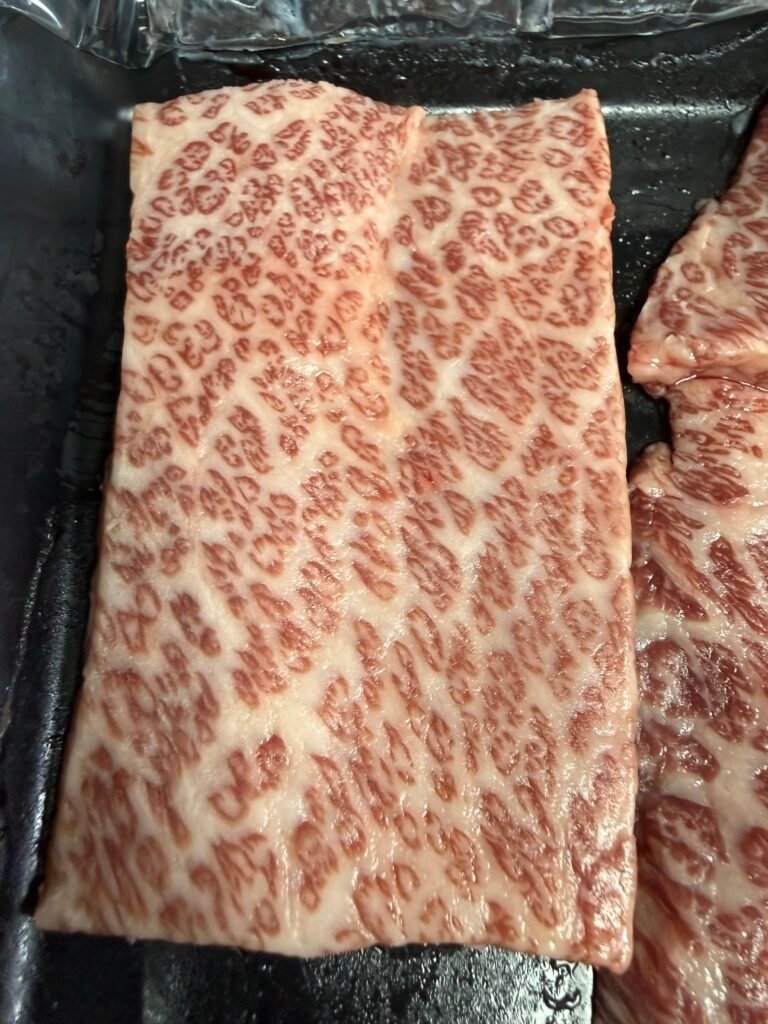
2.1 Fine, homogenous marbling
Hanwoo’s intramuscular fat (IMF) is:
- Abundant, but not excessively heavy like some Wagyu A5
- Distributed in very thin, elegant veins
- Rich in monounsaturated fatty acids (MUFA)
2.2 Fatty-acid profile & flavor chemistry
Scientific studies highlight that Hanwoo contains:
- High concentrations of oleic acid (C18:1)
- A low melting point → fat that melts on the tongue
- Superior sensory qualities: juiciness, tenderness, and buttery aromatics
Hanwoo tastes slightly sweeter and richer than typical beef, but more “meaty” and less overwhelmingly buttery than Wagyu.
2.3 Sensory balance
“The perfect midpoint between buttery richness and intense red-meat character.”
Hanwoo satisfies the palate without overwhelming it.
3. 🍽️ The Best Ways to Enjoy Hanwoo
🔥 Korean BBQ (Gui)
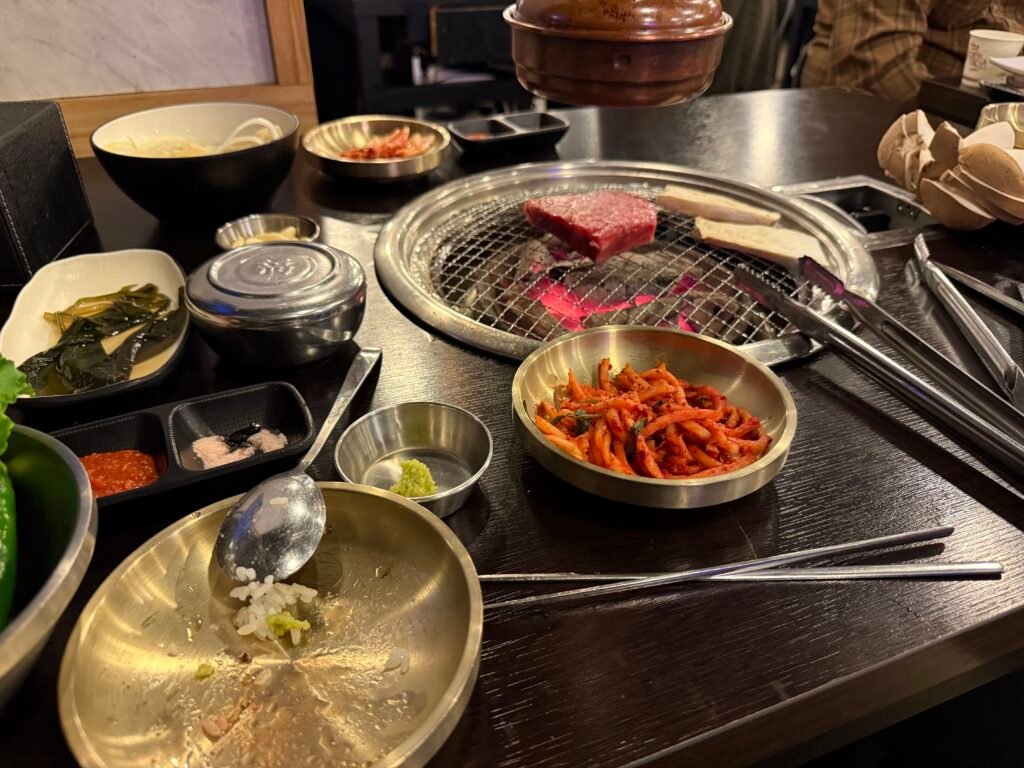
- High heat
- Very short cooking times (30–90 seconds per side)
- Minimal seasoning: salt, pepper, garlic
🍲 Raw (Yukhoe)
- Only with extremely fresh, clean cuts
- Delivers a silky texture with natural sweetness
🍛 Marinated (Bulgogi)
- Ideal for less-marbled sections
- Asian pear naturally tenderizes the meat
4. 🇰🇷 vs 🇯🇵 Hanwoo vs Wagyu
The ultimate comparison: flavor, price & fame
🔥 Flavor & Texture Comparison
| Factor | Hanwoo | Wagyu |
| Beefy intensity | ⭐️⭐️⭐️⭐️⭐️ | ⭐️⭐️⭐️ |
| Buttery richness | ⭐️⭐️⭐️⭐️⭐️ | ⭐️⭐️⭐️⭐️⭐️ |
| Aromatic complexity | High | Very high |
| Heaviness | Low–medium | High |
Summary:
- Wagyu → richer, sweeter, more buttery
- Hanwoo → more balanced, purer beef flavor
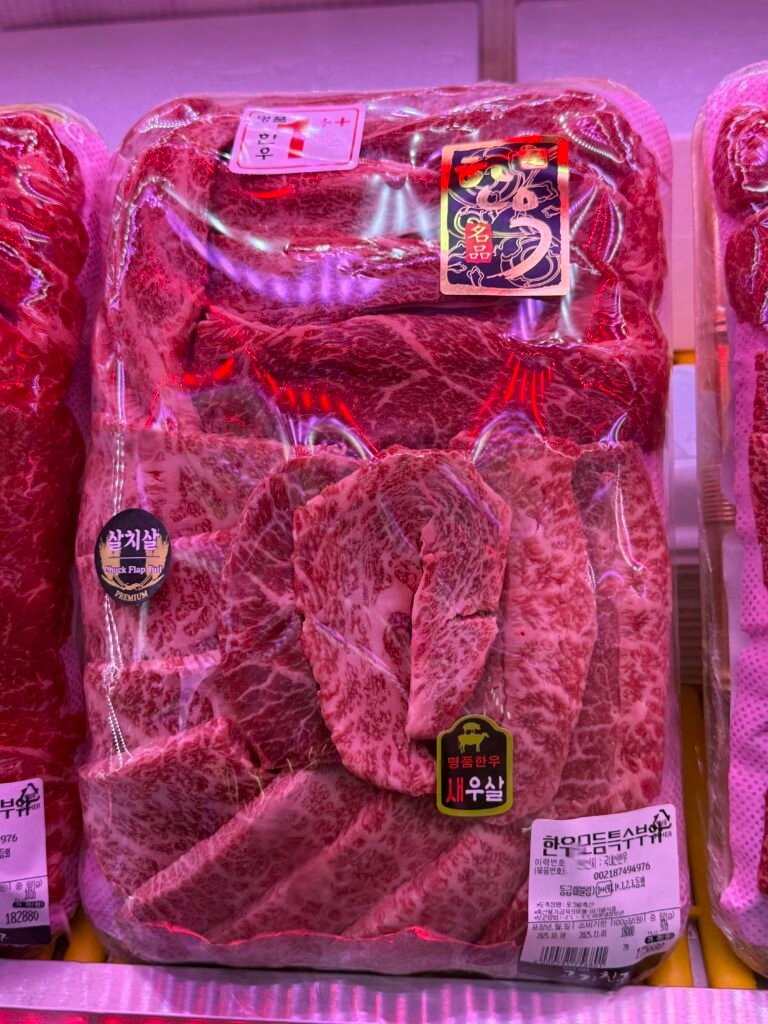
💰 Price Comparison
- In Korea, grade 1++ Hanwoo can be more expensive than imported Wagyu.
- In Japan, Wagyu is more accessible locally.
- In the West, Wagyu dominates luxury beef markets, while Hanwoo is niche.
🌍 Global Reputation
- Wagyu: international legend of luxury.
- Hanwoo: rising star in Asia, still emerging globally.
5. 👨🍳 Premium Hanwoo Recipes
🥩 5.1 Hanwoo Gui (Korean BBQ)
Ingredients
- 350 g Hanwoo ribeye/striploin (1++)
- Salt & pepper
- Sliced garlic
- Lettuce/perilla leaves
- Ssamjang
- Steamed rice
Steps
- Slice the beef thinly.
- Heat grill to maximum.
- Sear 30–60 seconds per side.
- Add salt at the end.
- Serve wrapped with rice, garlic and ssamjang.
🍯 5.2 Bulgogi with Premium Hanwoo
Ingredients
- 500 g thin-sliced Hanwoo
- ½ grated Asian pear
- Soy sauce, sugar, garlic, ginger
- Sesame seeds & scallions
Steps
- Marinate 1–4 hours.
- Stir-fry on high heat for 3–5 minutes.
- Serve with rice and side dishes.
🥩 5.3 Perfect Hanwoo Steak
Ingredients
- 200–250 g Hanwoo steak
- Coarse salt
- Neutral oil
Steps
- Pat dry thoroughly.
- Sear for 2 minutes per side.
- Cook 1–2 minutes more on low.
- Rest 5 minutes.
- Slice and salt.
🧠 Final Thoughts
Hanwoo is more than an ingredient—it is national pride, agricultural science, and a sensory experience that balances buttery richness with pure beef character.
Wagyu may remain the global icon of luxury beef, but Hanwoo is rapidly claiming a throne of its own.